
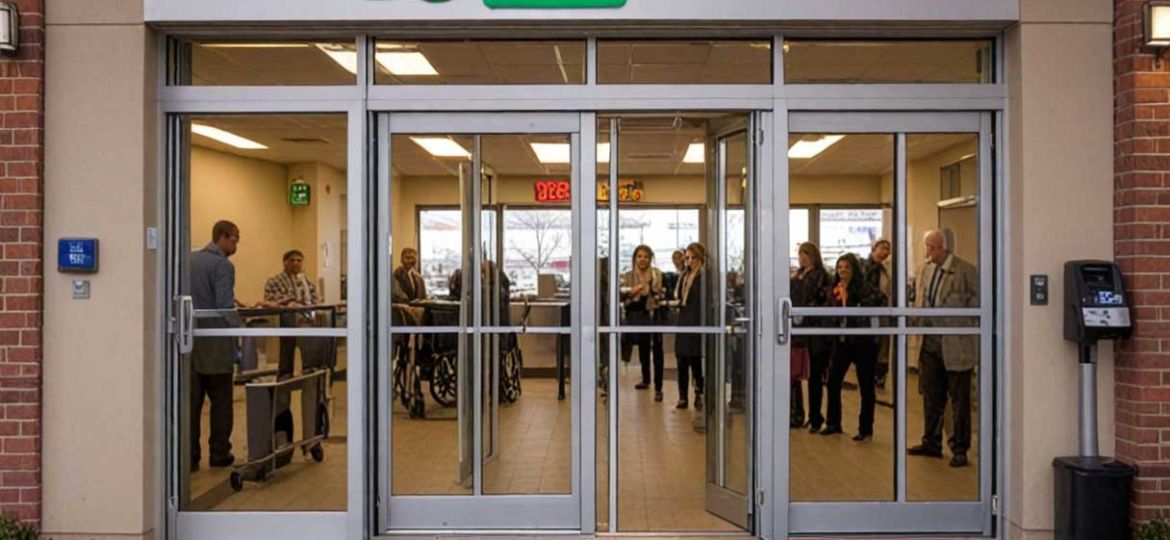
If your automatic doors open too slowly—or worse, fail to detect approaching visitors—it’s not just inconvenient; it’s a safety and customer experience issue.
Most of these problems can be traced to sensor placement and calibration. Over time, sensors drift, get blocked, or are adjusted incorrectly during other maintenance work. The result? Poor detection, false triggers, and unnecessary wear on your door components.
Here’s how to keep your sensor system performing at its best:
- Check Sensor Alignment Quarterly
Slight misalignment can mean missed detections or premature door closures—both costly and unsafe. - Clean Sensor Lenses Monthly
Dust, fingerprints, and debris reduce sensitivity and response time. A quick wipe with a soft cloth can make a major difference. - Test Coverage Zones
Walk-test your entry to ensure sensors detect both pedestrians and wheelchair users at every angle. - Balance Sensitivity and Range
Too much sensitivity causes false openings; too little can cause dangerous delays. Professional calibration ensures the right balance. - Reassess After Renovations or Remodels
Changes in lighting, floor color, or nearby displays can interfere with infrared or microwave detection.
